
How to Plan a Kitchen: Layout, Flow & Space Optimisation


Imagine your future kitchen for a moment. The ease of movement. Natural light reflecting softly across seamless cabinetry. Surfaces that feel calm and composed rather than cluttered. A space that works with you rather than against you.
Planning a kitchen is not simply about measurements and materials. It is the beginning of something meaningful. When thoughtfully designed, a kitchen becomes the quiet centre of daily life.
At Häcker Dubai, we approach kitchen planning as a partnership. German-crafted precision, durable engineering and refined design combine to create kitchens that perform beautifully for years to come.
This guide is here to simplify the process. Whether you are wondering how to design a kitchen, how to plan a kitchen layout, or how to make a small kitchen work better, you will find clarity here.
Everyone starts their kitchen journey differently
There is no single right way to begin planning a kitchen.
Some people arrive with carefully saved inspiration images. Others have a clear vision of colours and finishes. Some simply know that their current kitchen no longer works. And many are starting from a blank page.
All of these starting points are valid.
You do not need technical drawings or a perfect plan before speaking to a designer. Kitchen planning begins with understanding how you live.
If you are unsure what happens next, our guide on preparing for your kitchen consultation explains how to approach your first design conversation with clarity and confidence.
How to design a kitchen layout that feels effortless
When thinking about how to design a kitchen layout, begin with your routine rather than rules.
A well-designed kitchen should feel intuitive. You move naturally between preparation, cooking and cleaning. Nothing feels forced or awkward. Flow replaces friction.
How to design a kitchen layout around your routine
Instead of focusing immediately on shapes or configurations, reflect on habits.
Where do groceries enter the space? Where do you prepare meals? Where do you clean? Where do you pause for coffee in the morning?
This gentle reflection introduces zoning without complexity. Preparation, cooking and cleaning areas should feel connected but not crowded. The layout should support your rhythm rather than interrupt it.
For deeper inspiration on spatial configurations, explore our guide to finding the best kitchen layout for you.

Planning for space: making every metre work
Whether your kitchen is compact or expansive, thoughtful design transforms how it performs.
How to make a small kitchen look bigger
If you are asking how to make a small kitchen look bigger, the answer lies in continuity and restraint.
Light, cohesive colour palettes reduce visual breaks. Seamless cabinetry creates uninterrupted lines. Integrated appliances prevent surfaces from feeling fragmented.
Intelligent lighting placement eliminates shadowed corners and enhances depth. Precision engineering ensures cabinetry aligns perfectly, reinforcing a sense of calm order.
How to manage a small kitchen efficiently
Managing a small kitchen effectively is about organisation, not compromise.
Deep drawers often provide better accessibility than traditional cupboards. Vertical storage can be integrated into full-height cabinetry without feeling added on. Hidden internal organisation systems keep surfaces clear and functional.
You can explore intelligent storage solutions within our organisation unit collection, designed to maximise efficiency without disrupting visual harmony.
How to make more counter space in a small kitchen
Creating more usable counter space often comes down to integration.
Appliances can be built in rather than placed on surfaces. Worktops can extend into a peninsula where space allows. Multifunctional areas can serve both preparation and informal dining.
Clear, clutter-free surfaces are the result of considered kitchen planning.
Materials, durability and long-term confidence
Planning a kitchen is also about planning for longevity.
German kitchens are engineered for daily use. Moisture-resistant materials, robust cabinet construction and high-performance hardware contribute to long-term stability.
To understand how finishes and materials influence durability, explore our curated selection of materials and colour options, each chosen for long-term performance.
Durability offers reassurance. It means surfaces remain resilient. Hinges perform smoothly. Finishes maintain their integrity.
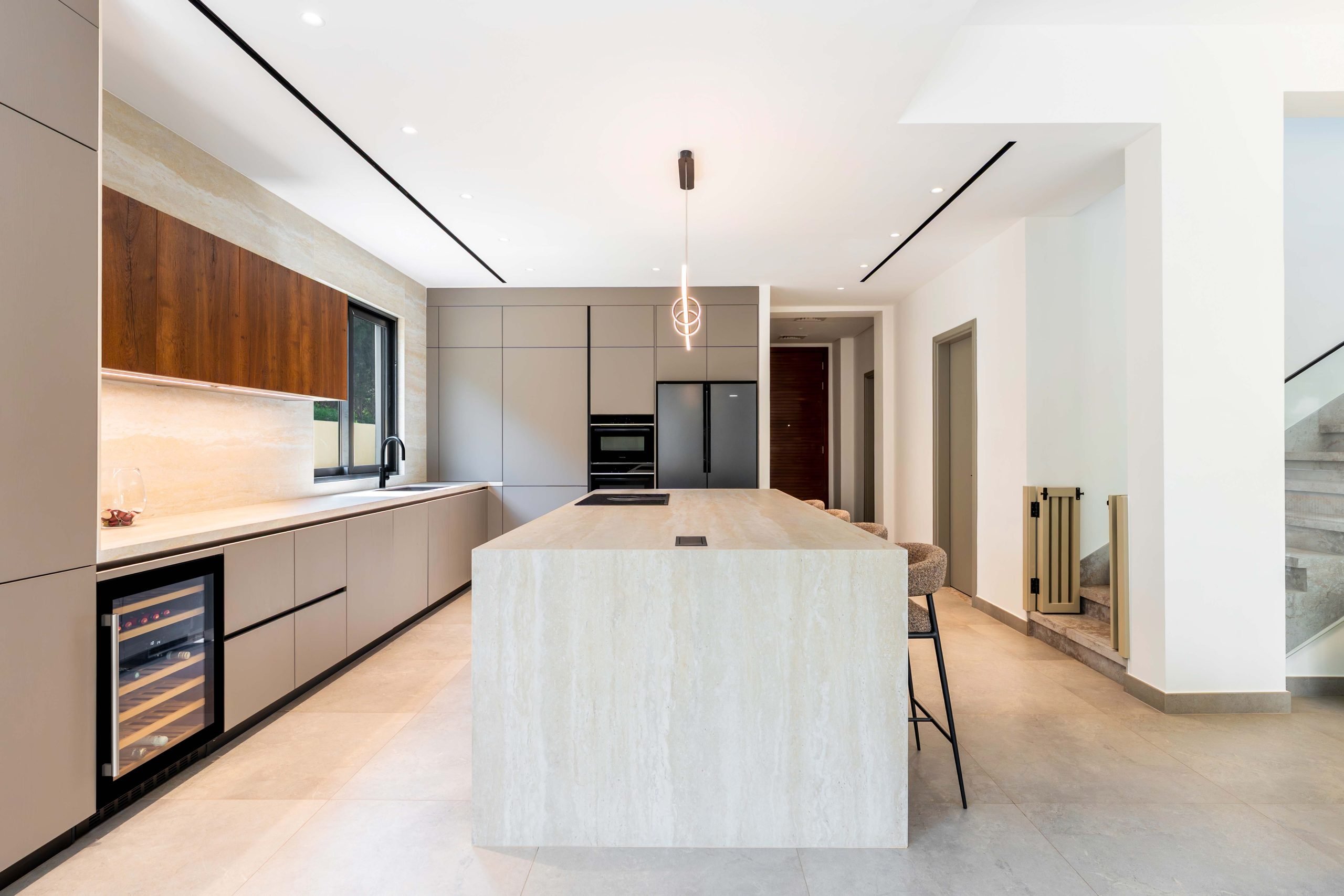
Designing for family life and real living
Kitchens are not showpieces. They are lived in.
Soft-close systems reduce noise. Resilient finishes withstand daily wear. Intuitive layouts create safer movement for families.
If you are designing with family in mind, our perspective on family-friendly kitchen design explores how style and durability can coexist effortlessly.
Planning beyond design: ensuring a smooth renovation
Renovation can feel overwhelming. But thoughtful planning reduces stress later.
Understanding layout, structural limitations and installation timelines early prevents costly revisions. Careful coordination between design and construction ensures clarity throughout the process.
Our article on ensuring a smooth kitchen installation outlines how structured planning supports a calm renovation journey.
FAQs
How to design a kitchen layout properly?
To design a kitchen layout properly, start with how you use the space each day. Consider where you prepare food, cook, clean and gather. A successful layout prioritises flow, minimises unnecessary movement and creates natural zones for preparation, cooking and storage without overcrowding the space.
How to plan a kitchen from scratch?
Planning a kitchen from scratch begins with lifestyle, not drawings. Think about your daily routine, entertaining habits, storage needs and the size of your home. Once these priorities are clear, a designer can translate them into a practical layout that balances function, comfort and long-term usability.
How to make a small kitchen look bigger?
To make a small kitchen look bigger, use light, cohesive finishes and seamless cabinetry that reduces visual breaks. Integrated appliances, minimal handles and well-positioned lighting help create uninterrupted lines, which visually expand the space and make it feel calmer and more open.
How to manage a small kitchen efficiently?
Managing a small kitchen efficiently requires intelligent storage. Deep drawers often perform better than cupboards, vertical cabinetry maximises height, and internal organisation systems prevent clutter. When every item has a defined place, the space feels larger and more functional.
How to hide structural columns in a kitchen?
Structural columns can be integrated into custom cabinetry, shelving or island layouts so they feel intentional rather than intrusive. With thoughtful kitchen planning, columns can define zones naturally and become part of the architectural design rather than an obstacle.
Start your kitchen journey with Häcker Dubai
Planning a kitchen is about shaping how life unfolds at home.
When layout, materials and craftsmanship align, the result is a space that feels intuitive, resilient and refined.
When you are ready to explore possibilities, you are welcome to visit the Häcker Dubai showroom or book your complimentary 30-minute consultation. Whether you have a clear vision or are just beginning to explore options, our designers are here to help shape a kitchen that feels entirely your own.
Read More
![]()
Kaiser is now part of Häcker
Learn MoreKaiser Kitchens has transitioned into Häcker, bringing our kitchen expertise together under one premium German kit...
![]()
Kitchen Layouts Explained: Open, Galley, Island & Peninsula Kitchens
Learn MoreKitchen layout is the foundation of how a kitchen feels and functions. Before finishes, colours or appliances are ...


Create a kitchen that is as individual as you.
German crafted, Exquisite Häcker Kitchen is waiting just for you.
Speak to Our Designers Now!